Does Beach Sand Damage Carpet Fibers Over Time?
Yes, beach sand can damage carpet fibers over time because each grain acts like a tiny abrasive that cuts, scratches, and weakens the carpet pile whenever people walk across it. In Bluffton homes, vacation rentals, and coastal properties, repeated sand exposure can make carpet feel gritty, flatten traffic lanes, dull the fibers, and shorten the carpet’s useful life long before the flooring appears severely stained.
Most homeowners think of beach sand as a housekeeping problem. It gets tracked inside, settles near entryways, sticks to bare feet, and seems to reappear only hours after vacuuming. The carpet may feel rough or gritty, but because sand does not always create a visible stain, it is easy to assume the problem is temporary and mostly cosmetic.
One of the biggest misconceptions we encounter is that sand simply sits harmlessly on top of the carpet until someone vacuums it away. In reality, the particles that remain after routine cleaning gradually work their way between the carpet fibers. Every footstep then presses those grains against the face yarn, creating friction that slowly wears away the fiber surface. The process is not dramatic enough to notice after one beach trip, but repeated exposure over months or years can permanently change the carpet’s texture and appearance.
We have cleaned homes where the owners described their flooring as feeling like sandpaper even though the carpet did not look especially dirty. In many cases, the fibers had been exposed to abrasive soil for so long that they had already lost some of their original softness and resilience. The gritty feeling was not only loose sand waiting to be removed. It was also evidence that the carpet pile had been repeatedly stressed by particles grinding against it.
That distinction matters because cleaning can remove embedded sand, but it cannot rebuild fiber tips that have already been worn away. The sooner the abrasive material is removed, the more of the carpet’s original texture and appearance can usually be preserved.
Tiny Sand Grains Behave Like Abrasive Cutting Tools
Beach sand appears soft when it is spread across the shore, but individual grains are hard, angular particles. Once those grains enter carpet, they behave much like extremely fine abrasive media. Walking across the floor forces the particles against the fibers, while twisting shoes, pet paws, and furniture movement create additional friction.
The damage usually begins at the tips of the carpet fibers. These tips are responsible for much of the softness, color reflection, and overall appearance people notice when carpet is new. As abrasive soil rubs against them, the surface becomes scratched and worn. The fibers may begin looking fuzzy, dull, or uneven because they no longer reflect light the same way they once did.
Over time, this abrasion affects more than appearance. Carpet pile depends on thousands of individual fibers standing and flexing together. When those fibers become weakened, they do not recover as well after being walked on. Traffic lanes begin staying flattened after vacuuming, and the carpet may feel compressed in the areas between entry doors, hallways, sofas, and kitchens.
One professional observation we have made repeatedly is that homeowners often mistake this kind of damage for ordinary aging. They assume the carpet is flattening simply because it is several years old. Age certainly matters, but abrasive sand can accelerate that aging process dramatically, especially in homes where outdoor traffic repeatedly follows the same paths through the house.
The carpet near a patio door may look ten years older than the carpet beneath a dining table even though both were installed on the same day. The difference is not the age of the material. It is the amount of abrasive soil and foot traffic each area has experienced.
Why Sand Keeps Coming Back After Vacuuming
Many Bluffton homeowners become frustrated because they vacuum thoroughly, empty a canister full of sand, and still feel grit beneath their feet the next day. This does not necessarily mean the vacuum is broken. It often means the sand has accumulated at multiple depths within the carpet system.
Larger grains may remain near the upper portion of the pile and come out fairly easily. Finer particles settle deeper, particularly in plush carpet where the fibers create narrow spaces that allow sand to move downward. Foot traffic then pushes those particles toward the primary backing and, in heavily contaminated areas, even into the carpet padding below.
Household vacuums are excellent for regular maintenance, but they do not all produce the same airflow, agitation, or soil removal. Some remove surface debris effectively while leaving much of the fine material trapped deeper in the pile. Even a strong vacuum may need several slow passes from different directions to loosen sand that has settled beneath the visible surface.
We have also found that damp sand is much harder to remove than dry sand. Moisture from wet feet, beach towels, rain, or Bluffton’s coastal humidity helps fine particles cling to carpet fibers. Once the sand dries in place, it may remain bonded to oily soil, spills, pet residue, or cleaning products already in the carpet.
This is why shampooing without proper dry-soil removal often produces disappointing results. Water and detergent do not dissolve sand. If a large amount of dry particulate soil remains before the carpet is wet, the cleaning process may turn that debris into a heavier mixture that settles even deeper and becomes more difficult to extract.
Bluffton’s Coastal Lifestyle Creates Continuous Sand Exposure
Bluffton is not directly on the beach, but many local households live a coastal lifestyle that brings beach sand indoors throughout much of the year. Families regularly travel to Hilton Head Island, visit public beach access points, spend time boating, or move between sandy recreation areas and carpeted homes. The result is not one isolated exposure. It is a repeating cycle of small amounts of sand entering the house week after week.
Children often bring the most visible sand home in shoes, clothing, bags, and beach toys, but adults and pets contribute just as much over time. Sand collects between sandal straps, adheres to damp skin, settles into towels, and becomes trapped in the fur around a dog’s paws and legs. Even after everyone rinses off, fine particles frequently remain.
Vacation rentals face an even more demanding version of this problem. A single family may visit the beach once or twice during a weeklong stay, but a heavily booked rental can experience new guests tracking in sand throughout the entire season. Entryways, hallways, bedroom paths, and living room traffic lanes receive repeated abrasive exposure without enough recovery time between turnovers.
We have seen newer carpets in coastal rentals lose their fresh appearance surprisingly quickly, not because they were poorly maintained, but because the flooring was exposed to a level of sand and foot traffic that would take years to accumulate in a lower-use home. Builder-grade carpet and lower-density pile tend to show this wear even sooner because they contain less fiber mass to resist crushing and abrasion.
Homes in communities such as Hampton Lake, Palmetto Bluff, Belfair, Berkeley Hall, and neighborhoods along the Buckwalter corridor may be miles from the ocean, yet beach traffic is still part of everyday life. Sand does not need to blow directly through the front door to become a flooring problem. It only needs a regular ride inside.
Wet Sand Causes a Different Kind of Carpet Problem
Dry sand is primarily abrasive. Wet sand introduces moisture, adhesion, and the potential for odor or microbial issues if the carpet remains damp for too long.
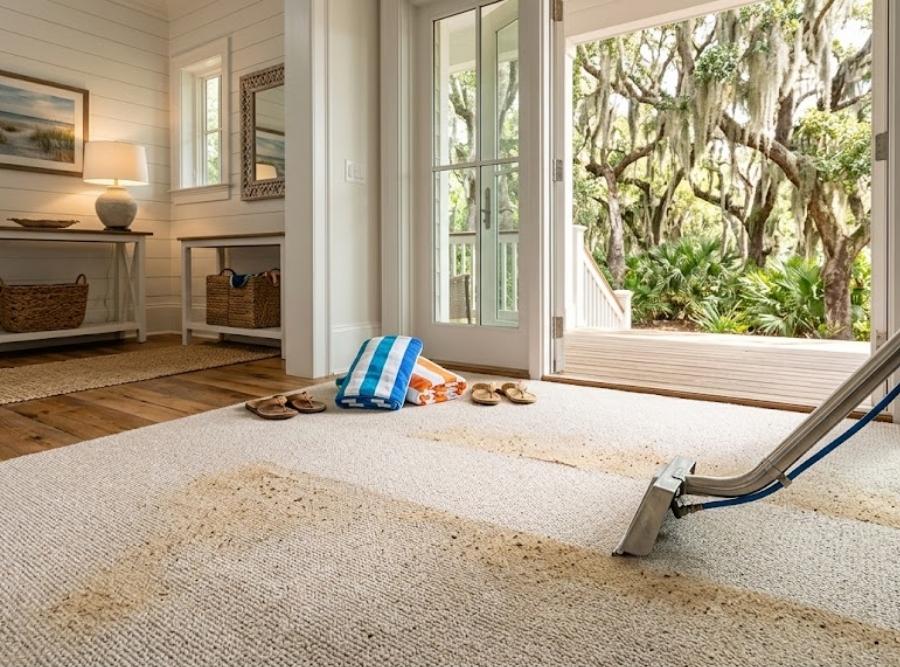
When people come inside after a beach day or summer thunderstorm, the sand on their feet and belongings often carries moisture with it. That moisture helps the particles cling to the carpet instead of remaining loose enough for easy vacuuming. Wet beach towels placed on the floor, damp pet paws, and bathing suits dropped in bedrooms can all transfer both water and fine sand into the carpet pile.
Bluffton’s humidity slows the drying process, especially in homes where the air conditioning is raised while the property is vacant or where airflow is limited in bedrooms and hallways. If damp sand works below the surface and moisture reaches the backing or padding, the carpet may develop a stale or musty smell that homeowners incorrectly attribute to “beach odor.”
The actual problem is usually a combination of trapped organic debris, moisture, and fine soil. Sand alone does not create mold, but wet carpet that remains damp can support microbial growth when enough organic material is present. This is particularly relevant in vacation rentals where an unnoticed damp towel or repeated wet foot traffic may affect the same carpeted area for several guest cycles.
One thing we have learned from coastal carpet cleaning is that homeowners often focus on the visible grains while overlooking the moisture that came inside with them. Removing the sand is important, but restoring the carpet properly also means extracting the soil without leaving behind additional water or detergent that prolongs drying.
The First Signs of Damage Are Usually Texture Changes, Not Stains
Sand damage rarely announces itself with one dramatic event. The earliest changes are subtle and often felt before they are seen. Homeowners may notice that the carpet no longer feels soft under bare feet, that certain areas remain flat after vacuuming, or that the entryway sounds faintly crunchy when walked across.
The carpet may also begin looking dull even though its color has not technically changed. This happens because scratched and abraded fibers reflect light differently from smooth, healthy fibers. Sunlight entering through windows can make traffic lanes appear darker or grayer, leading homeowners to assume the area is stained when much of the difference is actually physical wear.
Another warning sign is carpet that seems to collect dirt faster than it used to. Once fiber surfaces become roughened, soil adheres more easily. Worn pile also loses the ability to stand upright, creating compressed areas where fine debris becomes increasingly difficult to remove.
We have inspected carpet where the owner believed a darker path through the living room simply needed stronger cleaning. Professional extraction removed significant embedded soil and improved the appearance, but some of the shading remained because the fibers themselves had already become distorted. That is the point where cleaning and damage must be separated honestly. Cleaning can remove what is in the carpet. It cannot reverse every physical change that has happened to the carpet.
The best time to address beach sand is before the flooring reaches that stage. Regular dry-soil removal and periodic professional extraction can interrupt the abrasion cycle while the carpet still has enough resilience to recover.
Some Carpet Types Hide Sand Better—But That Does Not Mean They Resist Damage Better
Not every carpet reacts to sand in the same way. Fiber type, pile density, construction, age, padding quality, and installation all influence how quickly abrasive soil becomes noticeable. A dense, well-constructed carpet may conceal sand longer because the pile remains upright and the color disguises fine particles, while a lower-density carpet may show visible traffic lanes after only a relatively short period of heavy use.
Plush carpet is especially effective at trapping fine sand because the long fibers create more space for particles to settle below the surface. The carpet may still feel soft on top while a considerable amount of dry soil accumulates near the backing. Berber and loop-style carpets can also hold sand tightly between the loops, particularly when grains become mixed with moisture or sticky household residue. Repeated foot traffic can then grind those particles against the sides of the yarn rather than merely pressing them downward.
Lower-density and builder-grade carpets tend to lose their appearance faster because there is less fiber available to absorb daily wear. Once the pile begins crushing, sand has an easier path toward the backing, where it becomes increasingly difficult to remove through ordinary vacuuming. Older carpets face an additional challenge because worn fibers, weakened backing, and compressed padding provide less support than they did when the flooring was new.
Carpet padding matters more than many homeowners realize. The pad provides cushioning and helps the carpet flex under foot traffic. When sand works through the pile and settles near or inside the padding, every step can create a grinding action between the carpet, the debris, and the floor beneath it. The homeowner may only notice that the carpet feels harder or less comfortable, but the entire flooring system is experiencing additional stress.
This is why two homes with similar amounts of sand can show very different results. One carpet may still look acceptable after several seasons, while another appears dull and permanently flattened. The difference often comes down to material quality, traffic level, cleaning frequency, and how deeply the abrasive soil was allowed to accumulate before being removed.
Stronger Shampoo Is Not the Same as Better Sand Removal
When carpet feels gritty, many people assume the solution is more shampoo, a stronger cleaning product, or repeated passes with a rental machine. That approach makes sense when the problem is a sticky spill, but sand is not a substance that detergent can dissolve. It is a physical particle that must be loosened, suspended, and removed from the carpet.
The most important step in cleaning heavily sanded carpet often happens before water is introduced. Thorough dry-soil removal helps extract as much loose particulate material as possible while it is still relatively easy to recover. Skipping this stage and immediately wetting the carpet can cause fine sand to settle deeper, especially when the cleaning machine has limited suction.
Consumer rental machines often apply more moisture than they are able to remove efficiently. The carpet may look brighter at first because surface soil has been disturbed, but significant amounts of sand, water, and detergent can remain below. As the carpet dries, some of that soil migrates back toward the surface, creating the familiar experience of grit “coming back” a day or two after cleaning.
Excess carpet powder can create a similar problem. Powdered deodorizers may temporarily improve fragrance, but they add another fine particulate material to a carpet that is already holding sand. Unless vacuumed out completely, the powder can combine with moisture and soil, creating a residue that makes the pile feel stiff or dusty.
Aggressive brushing is another common mistake. Homeowners sometimes scrub gritty carpet with a stiff brush in an attempt to loosen the sand. While agitation can help when performed correctly, excessive force may fray the carpet fibers, spread the contamination into adjacent areas, or drive the grains farther down. The carpet may look fluffier for a few hours while suffering additional mechanical wear.
The goal is not to attack the carpet harder. It is to remove the abrasive material as efficiently as possible without creating unnecessary moisture, residue, or fiber damage in the process.
Professional Cleaning Interrupts the Wear Cycle Before It Becomes Permanent
Professional carpet cleaning cannot reverse fibers that have already been physically worn away, but it can remove the embedded soil responsible for accelerating that damage. This distinction is important because the value of cleaning is not limited to restoring color. It also lies in reducing the abrasive load carried inside the carpet pile.
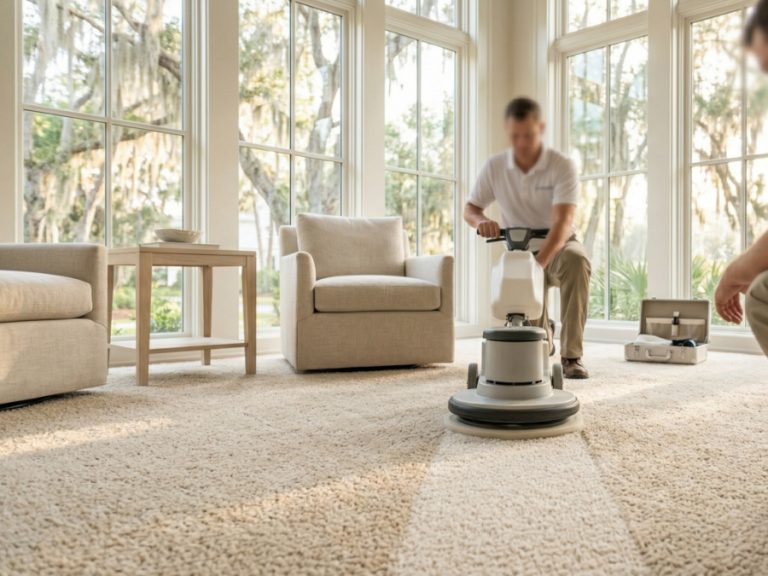
A thorough process typically begins with careful vacuuming or specialized dry-soil removal. This helps recover loose sand before moisture is applied. Appropriate preconditioning can then loosen the oily and sticky residue that causes finer particles to cling to the fibers. Agitation may be used where necessary to separate bonded soil without damaging the pile.
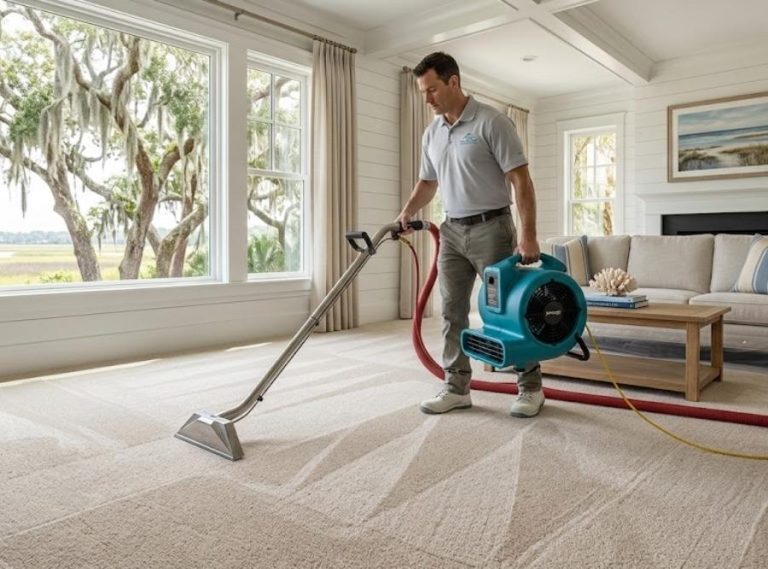
Hot water extraction then flushes loosened contamination from the carpet while strong vacuum recovery removes the water, suspended soil, and cleaning solution. In heavily affected entryways or traffic lanes, more than one controlled extraction pass may be needed. The objective is not to soak the carpet but to create enough movement through the pile to carry the embedded material out.
We have learned that sandy carpet often requires more patience than visibly stained carpet. A dark spot may respond quickly to treatment, while deeply embedded particulate soil can require repeated dry passes, extraction, and careful inspection. The carpet may release surprising amounts of sand even after the surface already looks clean.
Proper drying is equally important in Bluffton. Coastal humidity can slow evaporation, especially during summer or after prolonged rain. Strong extraction, indoor climate control, ceiling fans, and air movement help prevent the cleaning process from leaving the carpet damp longer than necessary. This is particularly important when wet sand, saltwater, spills, or organic debris have reached the lower pile.
Once the abrasive particles have been removed, the carpet is no longer experiencing the same grinding action with every step. Existing wear will not disappear, but the process that was making it worse can be slowed considerably.
The Entryway Usually Determines How Much Sand Reaches the Rest of the Home
The most effective sand-control strategy begins before anyone steps onto the main carpet. Entry design, household habits, and the placement of mats can make a major difference in how much abrasive debris reaches bedrooms, hallways, and living areas.
An exterior mat removes some of the larger particles before the door opens. A second interior mat catches finer debris that remains on shoes or bare feet. Using both is generally more effective than relying on one decorative rug that quickly becomes saturated with sand. Mats should also be cleaned frequently, because a full mat eventually becomes another source of particles rather than a barrier.
Removing shoes indoors can reduce contamination substantially, but beach sand does not enter only on footwear. Towels, bags, coolers, folding chairs, toys, pets, and clothing can carry sand well beyond the front door. A practical transition area near the garage, laundry room, patio, or mudroom gives residents and guests a place to shake out belongings before reaching carpeted rooms.
Outdoor showers are helpful but not perfect. Fine sand often remains around ankles, between toes, inside bathing suits, and within damp towels. Allowing people to dry fully on a hard surface before crossing carpet reduces the amount of moisture and sand transferred at the same time.
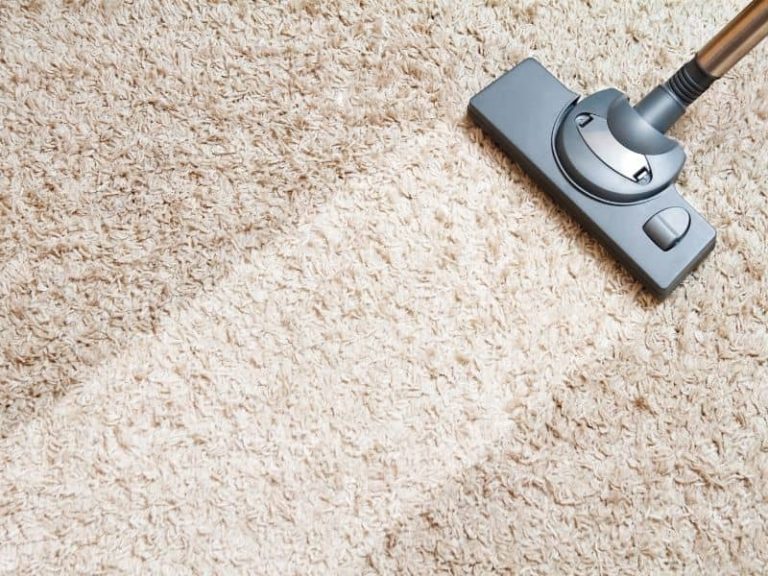
Homes with children or pets may need more frequent vacuuming near entrances because sand can spread quickly after a single outing. Slow passes in multiple directions generally remove more particulate soil than rapid back-and-forth movement. Vacuum height and brush-roll settings should also match the carpet type so the machine agitates the pile without causing unnecessary wear.
The objective is not to create a home where nobody can enjoy the beach. It is to establish a few practical barriers that prevent each trip from depositing another layer of abrasive soil throughout the house.
Vacation Rentals Need a Different Cleaning Schedule Than Lightly Used Homes
Vacation rental carpets experience concentrated use that is difficult to compare with ordinary residential traffic. New groups arrive with different habits, spend days moving between the beach and the property, and may not follow the same routines an owner would use at home. Even guests who are generally careful can introduce a substantial amount of sand during a one-week stay.
Turnover cleaning often focuses on visible presentation because the next guests are arriving quickly. Beds must be changed, bathrooms cleaned, surfaces wiped, and obvious debris removed. Carpet may receive a fast vacuum even when significant sand remains below the pile. The property looks ready, but the abrasive contamination continues accumulating from one booking to the next.
Over time, this creates a predictable pattern. Entryways become dull first, followed by hallways, routes between bedrooms and bathrooms, and the main path through the living room. Guest complaints may begin with comments that the floor feels dirty even though it looks acceptable in photographs. By the time permanent traffic lanes become obvious, much of the fiber damage has already occurred.
Property managers can reduce this wear by treating dry-soil removal as a routine maintenance priority rather than waiting for staining. Entry mats should be shaken, vacuumed, and replaced when worn. High-traffic areas may need periodic professional cleaning during the busy season rather than one annual appointment after months of heavy exposure.
A carpet that receives preventive maintenance may remain presentable for significantly longer than one cleaned only after guests begin complaining. For rental owners, that difference affects more than appearance. It can delay replacement, protect reviews, reduce recurring odor issues, and create a cleaner experience for each new arrival.
A Carpet Can Look Cleaner and Still Be Permanently Worn
One of the most important expectations to set before cleaning sandy carpet is the difference between soil and damage. Soil can be removed. Abrasion cannot always be reversed.
When traffic lanes remain darker after cleaning, some homeowners assume more dirt must still be present. That is possible, but the apparent discoloration may also come from pile distortion. Fibers that lean in different directions reflect light differently, creating shaded areas even after the embedded soil has been extracted.
The same principle applies to texture. Cleaning may remove the gritty particles and improve softness, but badly abraded fibers may never feel exactly as they did when new. Carpet with crushed pile, frayed yarn tips, weakened backing, or deteriorated padding has experienced physical change rather than simple contamination.
An honest professional evaluation should distinguish between what can be cleaned, what may improve gradually, and what has reached the point of permanent wear. That prevents homeowners from spending money on repeated cleaning in hopes of correcting damage that cleaning cannot repair. It also helps identify situations where localized repair, stretching, padding replacement, or full replacement is the more realistic solution.
The earlier abrasive soil is removed, the better the odds that cleaning will restore both appearance and feel. Once the carpet has lost significant fiber structure, maintenance becomes more about cleanliness and extending remaining service life than returning the floor to an original condition.
Sand Damage Is Preventable Even in a Coastal Bluffton Home
Beach sand can absolutely shorten the life of carpet, but coastal living does not automatically mean carpet must wear out prematurely. The most serious damage usually develops when repeated sand exposure, heavy traffic, moisture, and delayed cleaning occur together.
In Bluffton homes, the process often begins with ordinary routines: a weekend on Hilton Head Island, children returning from outdoor activities, a dog running through a sandy yard, or guests carrying beach gear through the main entrance. A small amount of sand settles into the carpet, and walking begins pressing it downward. The cycle repeats until the carpet feels gritty, traffic lanes flatten, and the pile no longer responds to vacuuming as it once did.
Frequent vacuuming with appropriate equipment, well-maintained entry mats, shoe removal, careful handling of wet towels, and periodic professional cleaning can interrupt that cycle. These steps do not eliminate every grain, but they significantly reduce the amount of abrasive soil left inside the carpet long enough to cause permanent damage.
At Carolina Carpet Cleaning, we understand the difference between carpet that is dirty and carpet that is being physically worn by embedded soil. From family homes off Buckwalter Parkway to properties near Old Town Bluffton and coastal rentals serving Hilton Head visitors, we focus on removing the dry particulate contamination that ordinary surface cleaning often leaves behind. Addressing sand before the fibers become permanently distorted is one of the most practical ways to protect the carpet’s appearance, comfort, and useful life.

Kevin Snow, founder of Carolina Carpet Cleaning, has been serving Bluffton and the Lowcountry since 1993. As a hands‑on owner, he built the company’s reputation on eco‑friendly, low‑moisture cleaning methods that leave carpets dry in under an hour. His team specializes in carpet, tile, grout, hardwood, upholstery, and oriental rug care, delivering safe, detergent‑free results for families and businesses across Bluffton, Hilton Head Island, Beaufort, Hardeeville, and Ridgeland.